


The post got likes. It did not get leads.
The post got hundreds of likes. It also got zero enquiries worth replying to.
That is the moment many B2B teams recognise: the boost budget is spent, the dashboard looks busy, and the sales team is quietly asking where the real leads are.
Meanwhile, somewhere else, a buyer is typing a very specific question into Google. They are ready to compare options. They are not scrolling. They are searching.
The question is whether your business is the answer they find.
The real problem
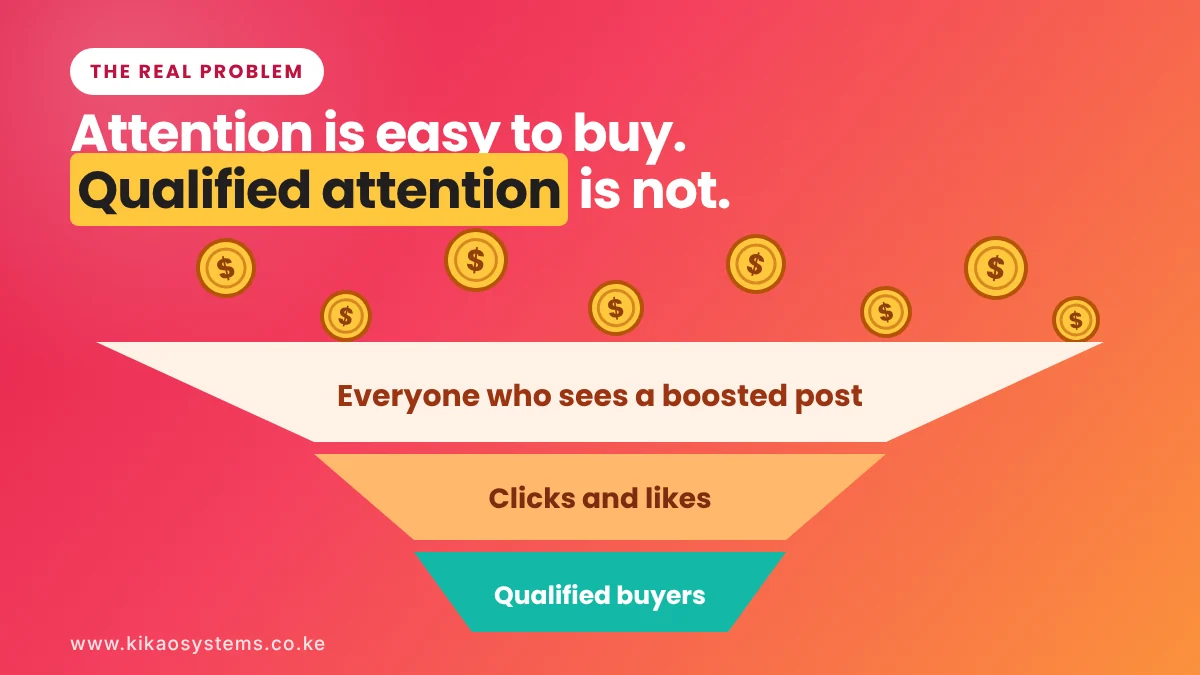
Boosting a post buys reach. It does not buy intent.
Most people who see a boosted post were not looking for you. They tap, they scroll on, and your budget moves on with them.
The cost is human as much as financial. Sales teams chase leads that were never going to buy. Marketing teams are asked to explain numbers that never turn into clients.
Worse, the leads stop the day the budget does. Nothing you paid for stays behind.
So what do the companies that escape this loop do differently?
The turning point
Look across published case studies and the same shift appears. These teams stopped asking, “How do we get in front of more people?” and started asking, “What is our buyer searching for right before they decide?”
That one change of question changed everything they published.
What they actually did
The details differ, but the approach is simple. Four examples:
- Concurate, a B2B fintech, built content around bottom-of-funnel topics: the questions people ask when they are close to choosing a provider. [1]
- Powered by Search mixed new posts with refreshed older ones, improving what already existed instead of only publishing more. [1]
- Scoro, a software company, grew its blog from a small base over roughly 20 months. [2]
- An enterprise IT services provider, profiled by Madison Marketing, published 10+ long-form posts in its first year. [3]
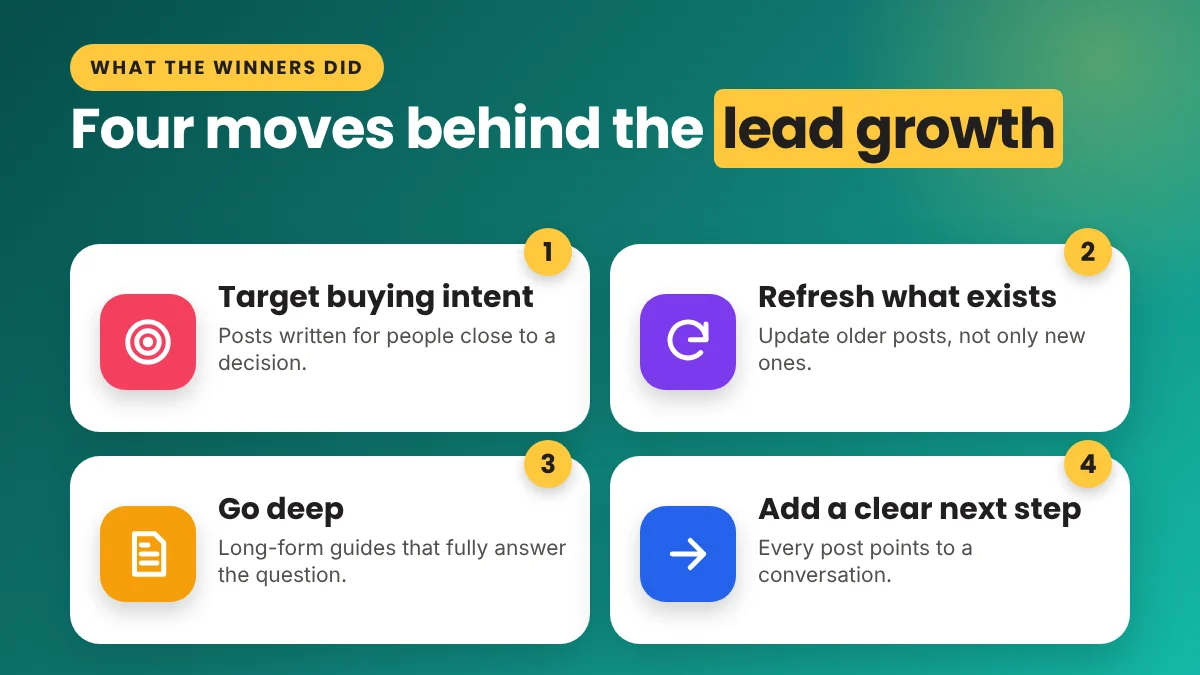
None of it is complicated. Write for buyers who are close to a decision, go deep enough to fully answer the question, keep older posts fresh, and give every post a clear next step.
The results
Here is what each source reported:
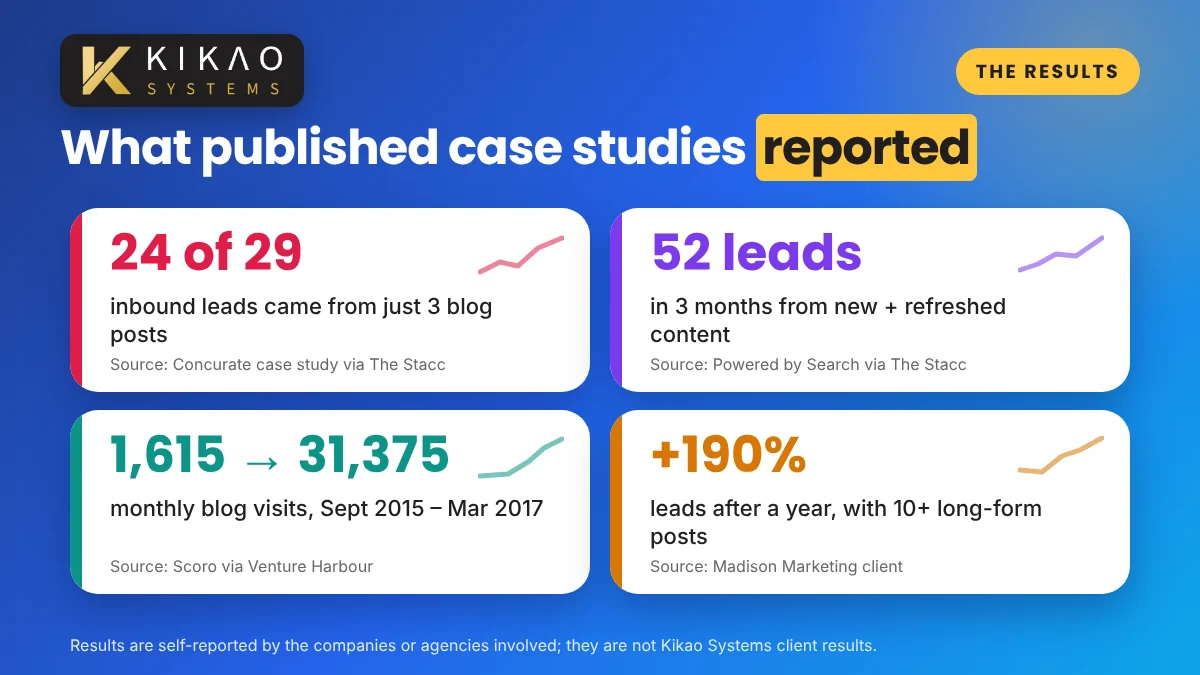
- Concurate: 24 of its 29 inbound leads came from just 3 blog posts. [1]
- Powered by Search: 52 leads in 3 months from new and refreshed content. The write-up links the overhaul to roughly $500K in pipeline. [1]
- Scoro: monthly blog visits grew from 1,615 to 31,375 between September 2015 and March 2017. [2]
- IT services provider: organic traffic up 132% and leads up 190% after one year. [3]
Notice the pattern. The wins did not come from clever tricks or huge budgets. They came from a small number of posts that matched what buyers were actively looking for, and from staying with the work long enough for search to reward it.
Treat these as encouraging, not guaranteed. Every figure is self-reported by the company or agency involved, results vary by industry and effort, and none of them are Kikao Systems client results.
Want to see what a content-led approach could look like for your business? We are happy to talk it through.
The deeper lesson
Ads rent attention. The moment the budget stops, so does the traffic.
A good blog post works differently. It is published once, found repeatedly, and keeps answering the same buyer question long after you have forgotten writing it.
That is why the teams in these case studies were not simply lucky. They treated content as an asset that compounds, not an expense that expires. Each post became a small, always-on salesperson, speaking to the right person at the right moment.
You do not need a huge team to start. You need to know your buyers’ questions, answer them better than anyone else, and make the next step obvious.
Where to start
You can begin this week, with no new tools:
- List the questions. Write down the ten questions prospects ask before they hire you.
- Answer the closest-to-decision ones first. Go deep. Be specific. Be more useful than the next result on the page.
- Give every post a next step. A button, a contact link, or an invitation to talk.
- Revisit your older posts. A short refresh every few months keeps them working.
If that sounds like the direction your marketing should be heading, explore how Kikao Systems can help you build it.
Click here to see our services
Ads rent attention. Content builds an audience you own.
Sources
[1] The Stacc: SaaS Blog Case Study (Concurate, Powered by Search, Growleads) — https://thestacc.com/blog/saas-blog-case-study/
[2] Venture Harbour: 10 Case Studies of Using Blogging for B2B Lead Generation (Scoro) — https://ventureharbour.com/blogging-case-studies-b2b-lead-generation/
[3] Madison Marketing: B2B Lead Generation Case Studies (enterprise IT services provider) — https://www.madisonmarketing.com/b2b-lead-generation-case-studies
blogging as a tecnique to generate potential leads has been under estimated by many establshed businesses
I agree with the writer
This is very insightful! - Thanks!